.png)
PropTech
The Next Phase of Proptech: From Integration to Experience
With Spaceflow’s full integration into Hydda, we are seeing the blueprint for the next decade. Here is how we see the proptech ecosystem evolving toward 2030.
Welcome to Part Two of the ultimate guide to tenant app features.
.jpg)
Welcome to Part Two of the ultimate guide to tenant app features. This article series serves as your starting point to introduce you to the main criteria, features, and benefits of tenant apps so you can get familiar with the options and see what matches your unique use case.
That should help inform your research and ultimately, your final decision when choosing the best tenant app…for your property.
In case you missed Part One, head over there now to not miss the full scope of what a tenant app can do for your customers. Part One covers community building and amenity access features.
These days, tech-enabled living is an expectation rather than a premium luxury. Tenants want a seamless, smart living and working experience that includes convenience, security, sustainability, and efficiency. And they’re willing to pay more to get it.
If you’re aiming for certifications such as BREEAM or LEED, and/or if your properties are future-proofed with smart technology such as smart meters or IoT devices, you’ll want a tenant app that supplements or integrates with smart tech hardware to act as the central hub. Look out for features like these.
Parcel management: Either through a native feature or through integration with smart locker systems, parcel management in a tenant app provides a simple, secure, digital tracking solution.

This feature notifies tenants instantly when their package arrives and provides a secure, efficient way for them to retrieve it, dramatically reducing the burden on your onsite teams and front desk space, and ensuring tenants get their deliveries without a headache.
Waste tracking: An integrated or native waste tracking feature provides the hard data needed to measure, manage, and ultimately minimize the waste generated in the building.
Tenants can have access to reporting to view accurate waste production data in kilograms and CO2e. Providing this reliable data and transparency supports the shared responsibility for waste reduction and helps tenants track their individual and community progress toward environmental goals.
Utility consumption: Sustainability and personal responsibility are highly valued, so giving tenants visibility into their energy and water usage is a significant differentiator for your properties. A utility consumption feature can let tenants see their personal consumption data, track their building's overall usage, join gamified challenges, and even compare their performance against benchmarks—all in the app.

As a bonus, some apps will also show tenants tips and tricks to reduce their consumption, ultimately reducing utility costs for both the tenant and the property.
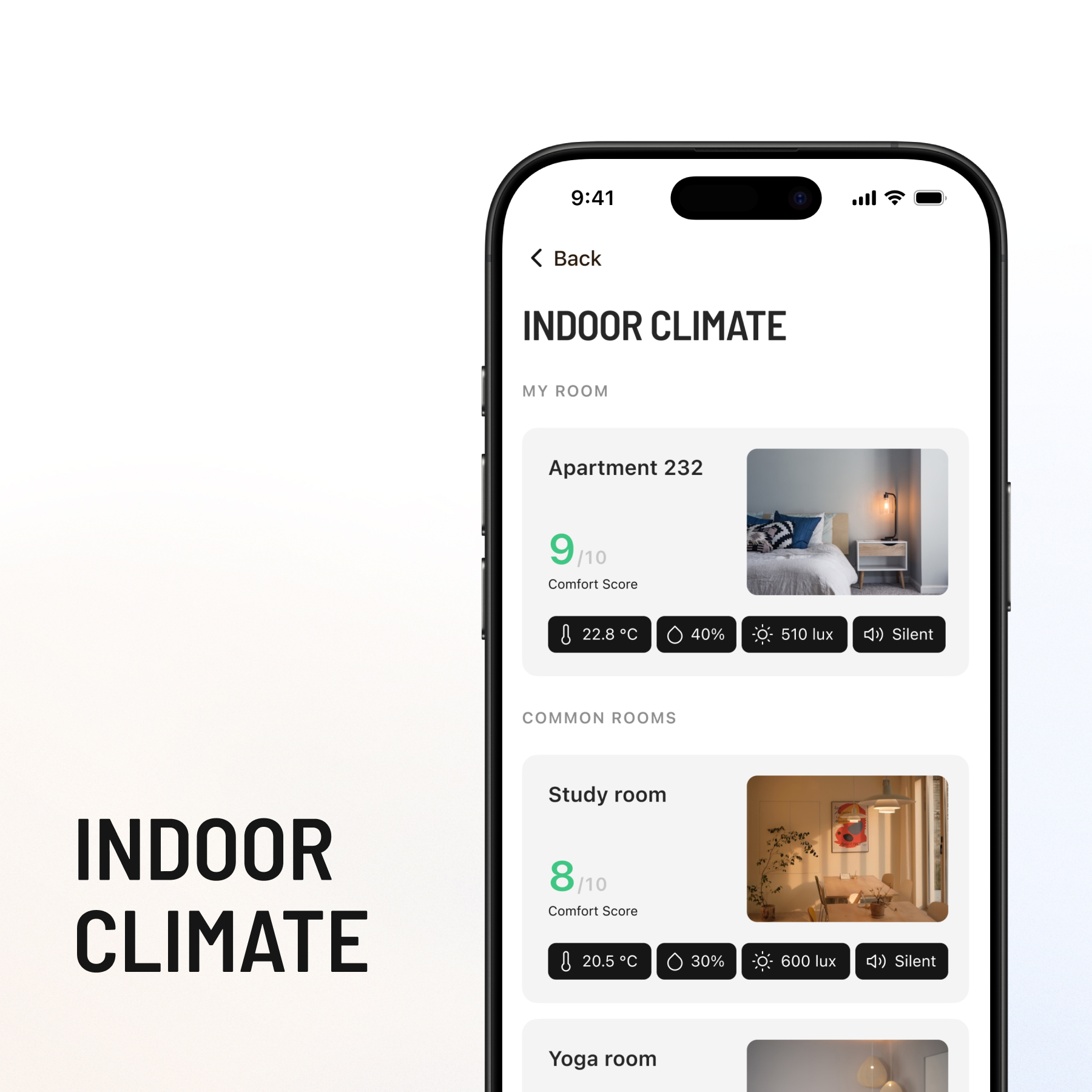
Other smart meters: Got even more meters? Well done you! You can’t improve what you don’t measure. So if your property has meters installed to measure indoor air quality, noise levels, light levels, temperature, or humidity, you may want a tenant app that integrates with those smart meters to show that data to tenants.
IoT device controls: In some cases, a tenant app can even connect to smart devices and control them. That means lights, thermostats, blinds on the windows, and so on. Typically, with this tenant app feature, the property manager is able to assign user permissions allowing limited controls for tenants as needed.
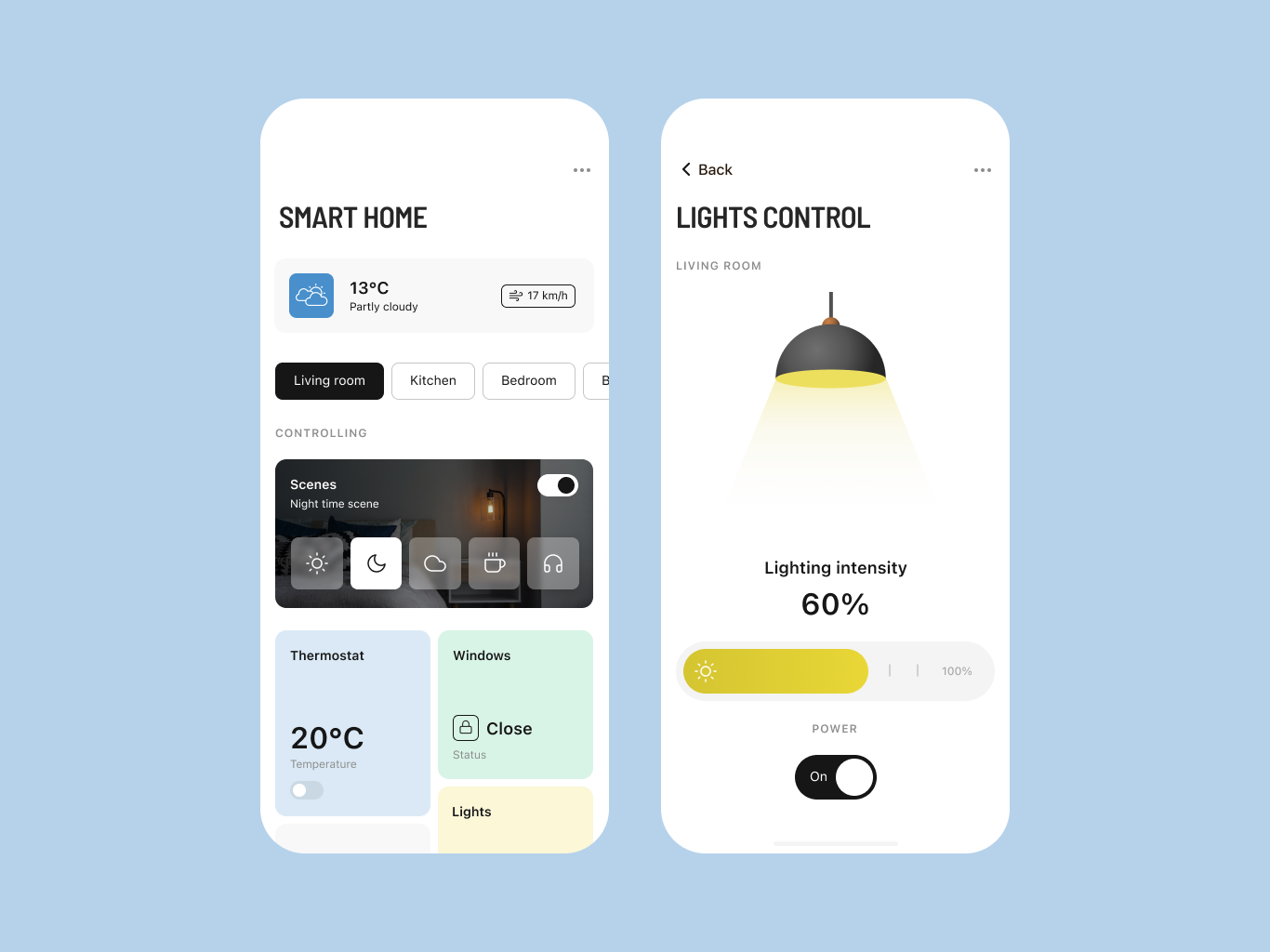
Combining smart metering data with IoT controls in the tenant app not only contributes to the tenants’ sense of personal responsibility, it can also directly (positively) impact energy consumption, operational expenditure, wellbeing, and building certifications.
Intercom: This one might be less smart, more just “technology,” but it does actively add to the customer experience for both tenants and visitors. If your commercial or residential building has intercoms for an extra layer of convenience and security, then you may want a tenant app that can connect and control the system.
This feature lets tenants receive real-time notifications for the doorbell, communicate with visitors via audio or video (depending on what hardware you have installed), and remotely open the door—and since it’s from the app, tenants don’t even have to get up to do all that.
Now we’ll get into a set of tenant app features that are a little less concrete. These are powerful competitive differentiators, not only among tenant app providers but also for you versus your competitors.
The next three features might appear to be passive or background noise only, but each one will heavily impact the tenant experience. Done well, that impact will be positive, but done badly? You’ll see a rise in complaints, negative reviews, and churn if tenants aren’t happy with their experience in your buildings.
Personalization: According to one McKinsey report, “There is a premium of up to 15 percent between the highest- and lowest-performing players in a market, controlled for similar building characteristics (such as location, age, and amenities).
The highest-performing companies have numerous things in common, including technology investments that enable personalization (such as emails that remember a tenant’s birthday or pet’s name)...and digital touchpoints that create transparency (such as an app for tenants to check on the status of maintenance requests).”
JLL also reported that 74% of consumers prefer brands that remember them and show it through personalized experiences. What does personalization look like in a tenant app?
First, there must be a solid connection between the tenant app and whatever system you use to collect and analyze data from your buildings; that could be a CRM or a property management system. When data can pass both ways (from system to app and from app to system), your workflows and customer touchpoints can be personalized based on tenant data.
Showing relevant content in the app, sending push notifications based on location or lease renewal dates, sending a survey after an event or service booking, an AI assistant that sends utility consumption tips based on an individual’s usage—these are all examples of personalizing your tenants’ daily touchpoints that will increase loyalty, trust, and satisfaction.
So when you look for the right tenant app for your buildings, keep this in mind and make sure your choice is well-equipped to offer personalized interactions.
AI-powered features: Despite the slow adoption of AI in real estate as a whole and the cybersecurity risks associated with it, many tenant app providers have already incorporated AI in some way with their offering. That’s the double edged sword of proptech, it can move quickly to innovate but then find out the industry or target clientele is a couple years away from catching up, as many choose to wait and see rather than risk investing in experiments themselves.
Take the Emerging Trends in Real Estate report from ULI—only 35% believe AI will impact the occupier experience to a large extent over the next 5 years (note: the numbers are better for AI impact on other areas of the real estate value chain). So what can you expect to see offered by tenant app providers?
The strongest use case for AI in the tenant app is an AI-powered assistant, usually in the form of a chatbot. If you want to implement this feature in your tenant app, this is what to look for.
The digital concierge should be able to perform tasks with zero input from any onsite teams. This is called “agentic AI,” as it can work autonomously with minimal human oversight.
Those abilities also tie in to enhancing the tenant experience by offering personalization, by the way. Here again you will need a connection between tenant data and the tenant app.
Finally, as we briefly mentioned above, any AI-powered feature in the tenant app must have airtight cybersecurity built in and clearly documented by the provider.
UX/UI design: Since we already covered this topic in heavy detail, we’ll keep this section short. The tenant app you choose must have an excellent user experience and a simple, easy-to-navigate user interface.
The better the UX, the better the tenant engagement, satisfaction, ROI, and even operational expense savings.
Got any questions after reading this? We're here to help. Send your Qs to our tenant experience management experts via hello@spaceflow.io

Join our mailing list
.jpg)