PropTech
The Next Phase of Proptech: From Integration to Experience
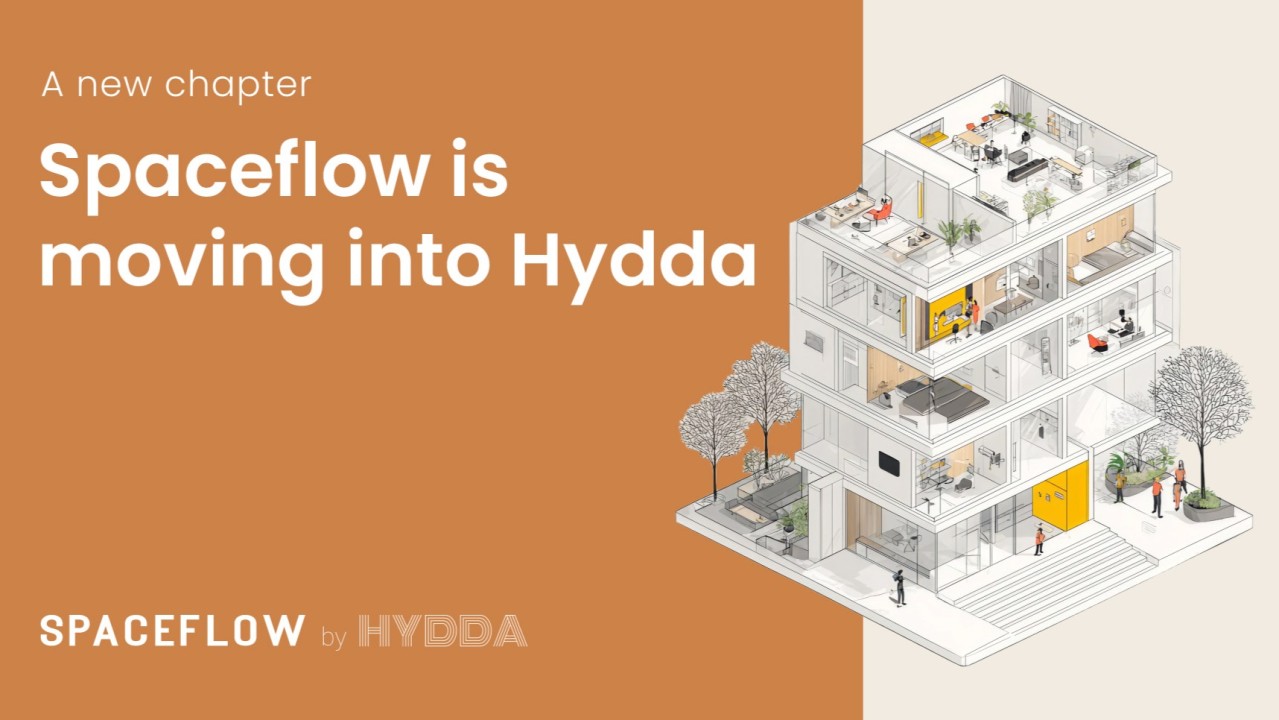
With Spaceflow’s full integration into Hydda, we are seeing the blueprint for the next decade. Here is how we see the proptech ecosystem evolving toward 2030.
With Spaceflow’s full integration into Hydda, we are seeing the blueprint for the next decade. Here is how we see the proptech ecosystem evolving toward 2030.
.png)
Over the past decade, proptech has been mostly about connecting systems, moving from paper logs to digital dashboards and from isolated silos to open APIs. But as we stand in 2026, the conversation has shifted. Real estate isn’t just about systems anymore, it’s about people.
So the next phase is not just better integration. It’s about making buildings easier to use, and enabling operators to deliver better service without adding more complexity.
With Spaceflow’s full integration into Hydda, the blueprint for the next decade is already taking shape. Here’s how we see the proptech ecosystem evolving toward 2030.
By 2030, we don’t think the best platforms will be defined solely by how many integrations they have, but by how the experience actually feels. Tenants won’t think about access systems, booking tools, or communication platforms. They’ll just expect things to work seamlessly.
Over the past several months, we’ve seen significant progress in AI agents that can operate autonomously via MCP (model context protocol) servers. As people begin to use their own AI agents, those expectations will rise, and we’ll see huge leaps forward in proptech as providers recognize the need for their own MCPs to help create that connected experience.
At the same time, that experience should clearly belong to the real estate operator’s brand without being split across different tools.
As a simple example:
A tenant arrives at the building where access, booking, visitor management, and communication are all aligned through one platform. This particular tenant is running late for their morning meeting, and the building’s AI agent for tenants can act on that: Update the room booking→Notify meeting attendees via push notification→all 100% independently without human input.
This doesn’t mean fewer systems, it just means they work cohesively together in a way that makes sense. It's the elimination of tenant friction and the preservation of brand loyalty—a result greater than the sum of a booking system and a messaging tool.
For operators, it leads to:
And that last point matters on several levels. When systems are fragmented, property teams spend a lot of time just managing tools. When they’re connected properly, that time goes from managing processes to curating hospitality experiences and maximizing asset value.
Once we achieve a truly connected (and on some levels, autonomous) ecosystem, the technology should effectively disappear. For tenants, it’s a simple equation: intuitive + invisible = compound value
The next step is what I’d call compound value—when systems working together create something you wouldn’t get from each of them on their own.
Instead of switching between tools for access, maintenance, communication, bookings, reporting—everything sits in one place for both tenants and operators.
That alone changes a lot:
The real value is being able to deliver a consistent experience without adding more complexity.
The path to a fully connected ecosystem isn't without hurdles. I foresee two major roadblocks:
Right now, most portfolios are still running on a mix of disconnected systems.
When systems don’t work together, teams spend time coordinating between them instead of focusing on tenants. That creates friction and makes it harder to deliver a consistent experience.
Platforms like Spaceflow by Hydda must act as the trust layer. Our role is to provide the "Digital Front Door" that ensures data flows securely with clear governance between stakeholders. We must champion plug and play modularity, ensuring that an owner is never locked into a stagnant stack, but can instead swap "modules" as technology evolves.
.png)
The goal is to make systems work together in a way that makes sense. One interface for tenants, one for operators, and all the flexibility they need to evolve the tech stack over time and stay aligned with business needs and tenant expectations.
In 2026, many operators still choose tech based on a checklist of features (e.g., "Does it have a booking tool?"). But the leading operators are already shifting toward measuring outcomes: ROI and asset resilience.
Increasingly, success is measured by:
Although I opened this article looking toward 2030, the timeline is no longer the most important variable. The real shift is already underway. The operators who will outperform aren’t the ones with the most tools, but the ones who can orchestrate them into a coherent experience. In a world of autonomous systems and AI agents, value moves from owning software to shaping outcomes.
The question is no longer “what systems do we have?” but “how does the building behave?”
Those who can answer that—consistently, at scale, and in line with their brand—won’t just keep up with the market. They’ll define it.

Join our mailing list
.jpg)